Why refurbishment is the boardroom’s new strategic lever
Why refurbishment is the boardroom’s new strategic lever
European logistics is shifting from a buy-and-replace model to a lifecycle-focused approach. As costs rise and sustainability regulations tighten, CEOs are viewing trailers as flexible capital rather than disposable assets. We sat down with TIP Group CEO Arjen Kraaij and asked him some key questions, and his answers illustrate why refurbishment is now a strategic priority.
With rising new equipment costs and corporate ESG demands, why has refurbishment shifted from a maintenance task to a strategic priority for boards?
"For a long time, the industry followed a ‘buy-new-then-replace' cycle because it was the easiest way to manage a balance sheet. However, the reality of the last few years, characterized by surging asset prices, unpredictable delivery windows and regulatory demands, has exposed the fragility of that model.
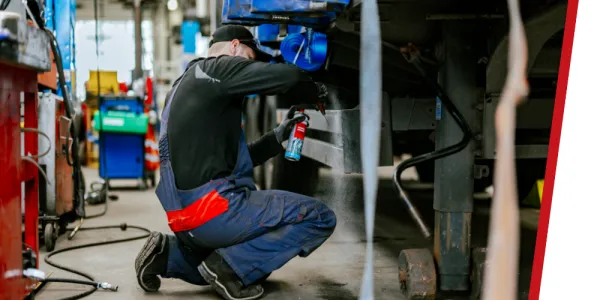
So, when I talk to boards today, the conversation is about converging asset strategy, capital allocation and sustainability. Refurbishment allows the life of assets to extend by another four to eight years at a fraction of the cost of new equipment. For a CEO or CFO, this means you aren't just reacting to the market; you are optimizing your capital allocation by maintaining capacity at a significantly lower cost and free up capital. It transforms the fleet from a rigid cost center into a strategic tool that is flexible and can be optimized. It’s about resilience, plain and simple."
How does data-backed refurbishment help leaders resolve the perceived tension between environmental goals and healthy margins?
"Sustainability is moving from the CSR report to the Annual Report, influencing how companies are valued and trusted, and that changes everything. With CSRD, transparency is no longer optional. We now have the data to show that refurbishing a trailer can reduce its carbon footprint significantly compared to manufacturing a new one, primarily by avoiding the energy-intensive production of steel and aluminum.
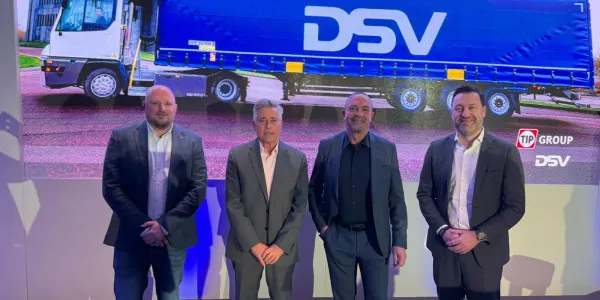
In our recent collaborations, such as refurbishment programs with DSV and P&O Ferrymasters, we’ve seen that data-backed decisions are the only way to align 'going green' with maintaining margins. When a sourcing team sees the hard numbers, specifically the tons of CO2 saved and the impact on the total cost of ownership, refurbishment stops being a 'green experiment' and becomes the logical choice. Both financially and in terms of CSR. Data is the bridge that allows us to meet these tightening expectations without compromising a customer's competitive edge."
Circular fleet management requires an ecosystem of collaboration. As TIP expands its 'Excellence Centers,' how are you evolving your workforce and partnerships to make refurbishment an industry standard?
"No one can achieve circularity in isolation. To make this a standard across Europe, we need an ecosystem where suppliers and service providers are all aligned on life-extension. We are investing in our own dedicated Excellence Centers and growing this network through strategic moves, such as our 2024 acquisition of Trailer Auto Group in the UK. We need controlled environments where high-spec refurbishment is the primary goal.”
Looking toward 2030, how can fleet leaders transition from a transactional 'buy-and-dispose' mindset toward a partnership-based lifecycle model?
"By 2030, the 'buy-and-dispose' mindset will be an outlier. The pressure from regulators, the market and planet will make the circular model the only viable way to scale or remain competitive. The real winners will be those who stop seeing their fleet as a liability and start seeing it as a strategic asset for growth.
My advice to fleet leaders is to look at the 'second life' of trailers as a planned phase, not an emergency backup. Start by standardizing your framework: ensure your assets are maintained to a level that makes them 'refurb-ready.' At TIP, we are working to remove the barriers to scaling this consistently across borders, so we can help a customer manage their assets as easily in Madrid as they do in Oslo. When you manage the full lifecycle, you don't just save costs; you build a more resilient business that can adapt to the evolving realities of our industry.”
For more information on refurbishment, visit: https://www.tip-group.com/en/refurbishment